 House style v2 for bhagya.cards. A calm, devotional, premium image for an Indian almanac website with a dark theme.
Mood: quiet and reverent, warm, like the hush before an evening aarti.
Light: low and warm, from diyas, brass lamps or first sunlight; soft falloff into deep shadow; gentle gold
highlights; never flash, never flat daylight.
Palette, held across the whole frame: a deep night-maroon ground (#160D0C, #1F1311) deepening to oxblood (#2B100D,
#3A1714) in the shadows; burnished gold (#E2B55E, #EDBE6E) as the main highlight; saffron (#F2A24A) only in flame,
marigold or thread; warm cream (#F3E8DF) only in cloth, paper or marble; sindoor red and leaf green as small natural
accents. No blue, teal or purple cast, no neon, no pastels, no white backgrounds.
Materials: matte handmade paper, hand-beaten brass and copper, cotton and silk, old teak, stone; fine film grain.
No drawn ornament, diagram or pattern laid over the scene; no frames, no borders.
Composition: one clear subject; generous dark negative space; the subject inside the central 70% of the frame, so it
survives a 1.91:1 crop; eye level or slightly above; shallow depth of field.
People, only when the subject needs them: Indian, in modest traditional dress, natural and unposed; hands, profiles
and backs rather than faces turned to the camera; no likeness of any real or well-known person.
Respect: a deity appears only as a temple murti or a framed traditional painting, small in the frame, garlanded,
whole and upright, never on the floor and never near footwear; one tradition's iconography per image. Do not draw any
specific yantra, and do not draw a card or any printed product.
The image carries no text, letters, numerals, logos, watermarks or signatures anywhere.
Finish: photographic realism with a fine-art feel.
SUBJECT: A home puja ghar on a Navratri evening. A small teak chowki is draped with a red chunari edged in gold, and on it stand a copper kalash crowned with mango leaves and a coconut wrapped in red cloth, a tall brass oil lamp burning steadily and a heap of red hibiscus. Behind, in the soft background, a small garlanded murti of Durga stands upright, out of focus. Thin strings of marigold hang at the edges of the frame. Warm lamplight, gold on brass and copper, deep shadow beyond. No people. Do not show: any yantra or drawn diagram, any card or printed product, any text, letters or numerals, a weapon or a deity's face in close-up.
FORMAT: 16:9 landscape, page hero.
In tradition, families keep the Shri Navdurga Yantra in the home as a prayer for happiness, peace and prosperity. Tradition gives it a simple process of consecration. In this blog, we will guide you through the steps to properly use the Navdurga Yantra.
"Families keep the Shri Navdurga Yantra at home as a prayer for happiness, peace and prosperity. They also turn to it in times of trouble and difficulty. Therefore, it is appropriate to install it in your home."
Choosing the Right Location
Consecrating the Yantra
Once you have found the ideal location, it's time to consecrate the Navdurga Yantra. Follow these steps:
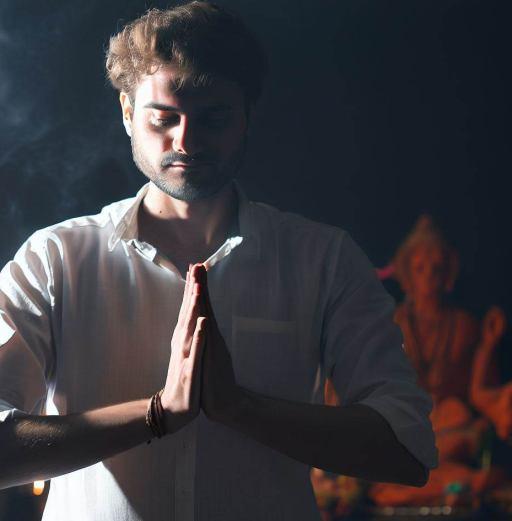
- Place some fresh flowers on the Yantra as a symbol of devotion and purity.
- Light an oil lamp to create an atmosphere of spirituality and enlightenment.
Sprinkle a few drops of water on the Yantra four times, representing the purification of the surroundings. - Perform a bath for the Yantra using milk, followed by a bath with clean water. In tradition, this step purifies the Yantra and prepares it for worship.
- Repeat the process with yogurt, pure desi ghee, sugar, and honey, each time followed by a bath with clean water. These substances hold sacred significance.
- After the final bath, bathe the Yantra with a mixture of milk, yogurt, ghee, sugar, and honey, symbolizing the infusion of divine blessings.
- Clean the Yantra thoroughly with clean water, ensuring it is free from any residue.
Apply a kumkum (vermilion) tilak to the Navdurga Yantra, signifying that it is ready for worship. - Install the Yantra on a pedestal or sacred cloth, elevating its presence and importance in your home.
 House style v2 for bhagya.cards. A calm, devotional, premium image for an Indian almanac website with a dark theme.
Mood: quiet and reverent, warm, like the hush before an evening aarti.
Light: low and warm, from diyas, brass lamps or first sunlight; soft falloff into deep shadow; gentle gold
highlights; never flash, never flat daylight.
Palette, held across the whole frame: a deep night-maroon ground (#160D0C, #1F1311) deepening to oxblood (#2B100D,
#3A1714) in the shadows; burnished gold (#E2B55E, #EDBE6E) as the main highlight; saffron (#F2A24A) only in flame,
marigold or thread; warm cream (#F3E8DF) only in cloth, paper or marble; sindoor red and leaf green as small natural
accents. No blue, teal or purple cast, no neon, no pastels, no white backgrounds.
Materials: matte handmade paper, hand-beaten brass and copper, cotton and silk, old teak, stone; fine film grain.
No drawn ornament, diagram or pattern laid over the scene; no frames, no borders.
Composition: one clear subject; generous dark negative space; the subject inside the central 70% of the frame, so it
survives a 1.91:1 crop; eye level or slightly above; shallow depth of field.
People, only when the subject needs them: Indian, in modest traditional dress, natural and unposed; hands, profiles
and backs rather than faces turned to the camera; no likeness of any real or well-known person.
Respect: a deity appears only as a temple murti or a framed traditional painting, small in the frame, garlanded,
whole and upright, never on the floor and never near footwear; one tradition's iconography per image. Do not draw any
specific yantra, and do not draw a card or any printed product.
The image carries no text, letters, numerals, logos, watermarks or signatures anywhere.
Finish: photographic realism with a fine-art feel.
SUBJECT: Laid out on a teak plank in a home puja ghar, the things for an abhishek in small hand-beaten brass katoris: milk, yogurt, golden desi ghee, white sugar and honey, with a copper lota of clean water and a folded cream cotton cloth. Beside them sit a small silver bowl of kumkum and a few grains of rice. A woman's hand with red glass bangles reaches to lift the bowl of milk. A brass oil lamp burns at the edge of the frame, its warm light making the ghee and honey glow gold against deep shadow. Do not show: any yantra or drawn diagram, any card or printed product, any text, letters or numerals, a face.
FORMAT: 4:3 landscape, inline image.
Offerings and Mantra Chanting
You can also make offerings to the Navdurga Yantra and chant mantras. Follow these additional steps:
- Place a handful of rice grains on the Yantra as an offering, symbolizing abundance and sustenance.
- Offer a sweet delicacy as a bhog (offering), expressing gratitude and devotion.
- Take water in your hand, make a sankalp (vow), and chant the mantra
"Om Dum Dum Dum Durgayai Namah"
5000 times.
In tradition, this mantra invokes the blessings of Maa Durga. Devotees perform these rituals with sincerity and faith.
Maintenance and Care
The Shri Navdurga Yantra is a sacred object that families keep at home with devotion. Follow the process of consecration, perform regular care, and pray for the blessings of Maa Durga. Remember to approach the Navdurga Yantra with reverence, faith, and gratitude, and let it be a part of your spiritual practice.